Hypospadias in Children: A Complete Guide for Parents
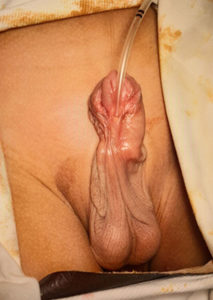
Meatal opening on the undersurface of the penis
What is Hypospadias?
Hypospadias is a common congenital condition in boys, where the opening of the urethra (through which urine passes) is not located at the tip of the penis, but instead on the underside.
It may also be associated with:
- Curved penis (chordee)
- Hooded foreskin
- Abnormal urine stream
- It affects approximately 1 in every 200–300 male births.
Types of Hypospadias
Hypospadias is classified based on the location of the urethral opening:
1. Distal (Mild)
- Opening near the tip
- Most common type
2. Midshaft
- Opening along the penile shaft
3. Proximal (Severe)
- Opening near scrotum or perineum
- Often associated with curvature
Signs & Symptoms Parents Should Notice
- Urine comes out from below the tip
- Abnormal urine stream (downward spray)
- Curved penis
- Incomplete foreskin
Many cases are diagnosed at birth, but some are detected later.
Best Time for Hypospadias Surgery
The ideal age for surgery is: 2 to 4 years
Why early surgery is important:
- Better healing
- Minimal psychological impact
- Improved surgical outcomes
Types of Hypospadias Surgery
The goals of surgery are:
- Create a normal urine opening at the tip
- Straighten the penis
- Achieve good cosmetic appearance
Common surgical techniques:
- TIP Repair (Snodgrass) – most common
- Onlay flap repair
- Two-stage repair (for severe cases)
What Type of Anesthesia is Used?
Hypospadias surgery is done under:
- General anesthesia (child is asleep)
- Often combined with caudal block for pain relief
This ensures a safe and pain-free procedure
Possible Complications of Surgery:
Although success rate is high, possible complications include:
- Urethrocutaneous fistula (urine leakage)
- Meatal stenosis (narrow opening)
- Residual curvature
- Infection
Most complications are treatable with good outcomes
Important Advice for Parents
- Do NOT circumcise before evaluation
- Consult a pediatric surgeon or pediatric urologist early
- Follow proper postoperative care
Frequently Asked Questions (FAQ)
🔹 Is hypospadias dangerous?
No, but it should be corrected surgically for normal function.
🔹 Can my child live normally after surgery?
Yes—most children have normal urination and future sexual function.
🔹 Is surgery always necessary?
Most cases require surgery for proper correction.
Hypospadias Treatment in Bangladesh
Early diagnosis and proper surgical management by an experienced pediatric surgeon ensures the best outcome.
Consultation
Dr. Md Samiul Hasan
Associate Professor (Pediatric Surgery)
Neonatal & Pediatric Surgery and Pediatric Urology Specialist
Bangladesh Shishu Hospital and Institute
Chembar: Alliance Hospital Limited
Ring Road, Shyamoli, Dhaka .
01720422448, 01712886034
🌐 Website: www.drsamiulhasan.com