
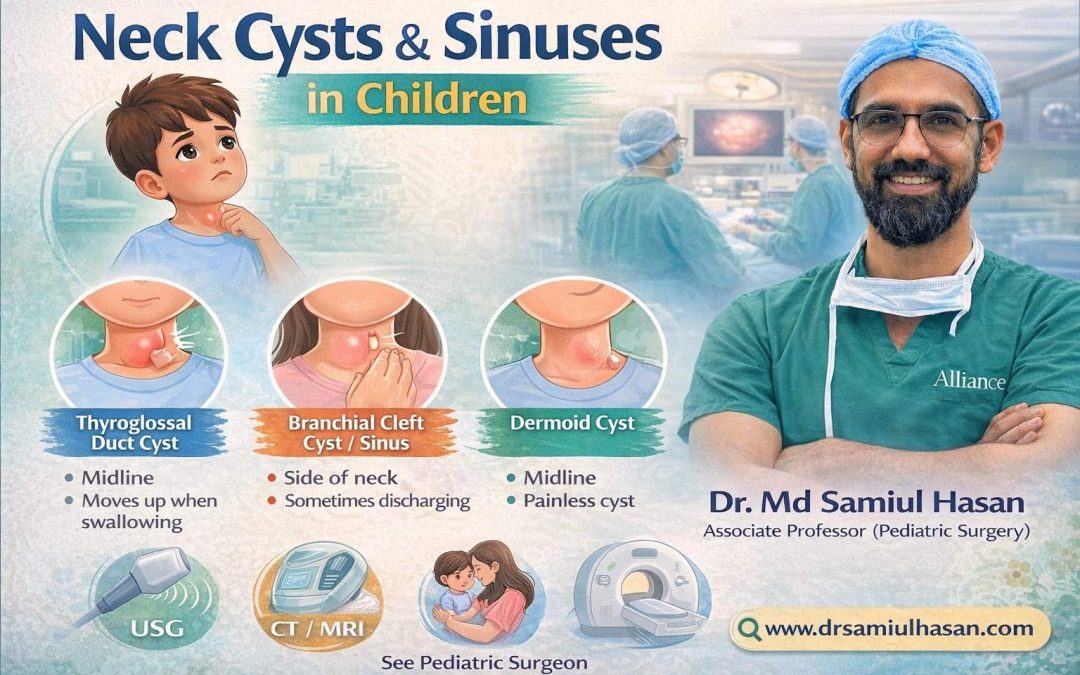
Neck swellings in children are a common concern for parents. Many of these are due to congenital cysts and sinuses, which are present from birth but may become noticeable later. Understanding these conditions helps ensure timely diagnosis and proper treatment.
What are Neck Cysts and Sinuses?
- Cyst: A closed sac filled with fluid or semi-solid material
- Sinus: A small tract or opening on the skin that may discharge fluid
These are usually developmental anomalies arising during fetal growth.
Common Types
1. Thyroglossal Duct Cyst (TDC)
- Most common neck cyst in children
- Located in the midline (center of the neck)
- Moves upward when the child swallows or sticks out the tongue
May become infected and painful
2. Branchial Cleft Cyst / Sinus
- Found on the side of the neck
- May present as:
- Painless swelling
- Small opening with discharge
Infection is common
3. Dermoid Cyst
- Usually located in midline
- Slow growing and painless
- Does not move with swallowing
When Should Parents Be Concerned?
Seek medical advice if you notice:
- Persistent neck swelling
- Recurrent infection or redness
- Discharge from a small opening
- Rapid increase in size
- Pain or fever
How is it Diagnosed?
- Clinical examination by a pediatric surgeon
- Ultrasound (most common investigation)
- Occasionally:
- CT scan
- MRI
Treatment: Definitive treatment is surgery
For Thyroglossal Duct Cyst: Sistrunk operation (removal of cyst + tract + part of hyoid bone)
For Branchial anomalies: Complete excision of cyst/sinus tract
Why Early Treatment is Important?
- Prevent repeated infections
- Avoid abscess formation
- Reduce surgical difficulty
- Lower recurrence risk
Key Message for Parents: Neck cysts and sinuses in children are usually benign and treatable conditions.

Early diagnosis and management prevents complications
Early evaluation by a pediatric surgeon ensures safe and complete cure.