
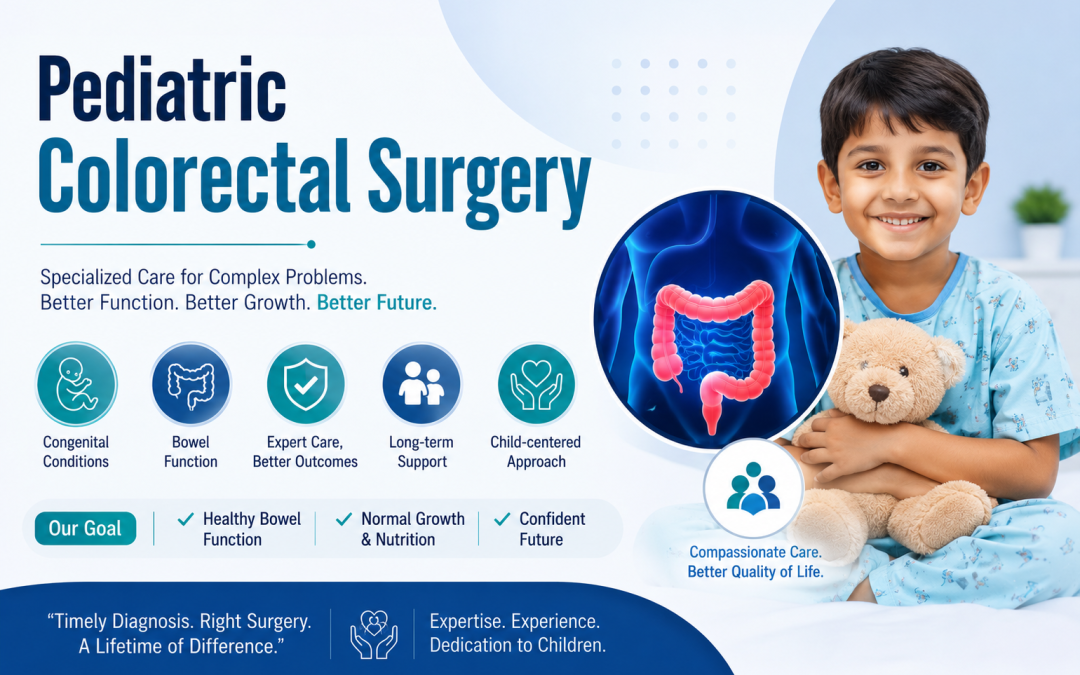
What is Pediatric Colorectal Surgery?
Pediatric colorectal surgery is a specialized branch of pediatric surgery that deals with diseases of the colon, rectum, and anus in children. Many of these conditions are congenital (present from birth), while some develop later in infancy or childhood.
These problems can affect:
- Passage of stool
- Bowel control
- Nutrition and growth
- Urinary and genital function
- Overall quality of life
Because these conditions involve delicate anatomy and long-term bowel function, treatment often requires highly specialized surgical expertise.
Common Pediatric Colorectal Problems
1. Anorectal Malformations (ARM)
Babies are born without a normal anal opening or with an abnormal connection (fistula).
Examples:
- Rectovestibular fistula
- Rectourethral fistula
- Cloaca
- Imperforate anus
2. Hirschsprung Disease
A condition where part of the intestine lacks nerve cells, causing severe constipation, abdominal distension, and intestinal obstruction.
3. Chronic Severe Constipation
Some children develop severe constipation due to functional or structural bowel problems.
4. Colonic Dysmotility
The colon does not move stool properly, leading to severe bowel dysfunction.
5. Fecal Incontinence / Soiling
Children may have difficulty controlling stool after congenital problems, spinal conditions, or previous surgeries.
What is the Goal of Treatment?
The aim is not only to perform surgery, but also to help the child achieve:
– Safe passage of stool
– Good bowel control
– Normal growth and nutrition
– Prevention of infection and complications
– Better quality of life and social confidence
Treatment often includes:
- Surgery
- Bowel management
- Nutrition
- Long-term follow-up
- Family education
Why are These Operations Complex?
Pediatric colorectal surgery is often challenging because:
Complex Anatomy:The colon, rectum, urinary system, genital organs, and pelvic muscles are closely related.
Tiny Structures: Newborns and infants have very small and delicate tissues.
Functional Importance: The surgery must preserve:
- Continence
- Nerve supply
- Urinary function
- Future quality of life
Multiple Associated Anomalies
Many children also have:
- Spinal anomalies
- Urinary tract abnormalities
- Cardiac problems
- Genital anomalies
- Long-Term Impact
The outcome affects the child for many years, sometimes lifelong.
Importance of Correct Surgery at the Right Time: Timely and properly planned surgery is extremely important. Early expert treatment can:
-Prevent severe complications
– Improve bowel control
-Reduce infections and hospitalizations
– Protect urinary and kidney function
– Improve long-term quality of life
Delayed or inappropriate surgery may lead to:
-Chronic constipation
– Soiling and incontinence
– Recurrent infections
– Psychological and social difficulties
– Need for redo surgeries
Modern Advances in Pediatric Colorectal Surgery
Today, many children benefit from:
- Neonatal reconstruction
- Minimally invasive surgery
- Advanced bowel management programs
- Multidisciplinary care
- Better long-term functional outcomes
Final Message
Children with colorectal problems need more than an operation — they need careful planning, long-term care, and specialized pediatric colorectal expertise.
Timely diagnosis and proper treatment can help many children lead healthy, confident, and independent lives.
Dr. Md Samiul Hasan
Associate Professor (Pediatric Surgery)
Neonatal & Pediatric Surgery and Pediatric Urology Specialist
www.drsamiulhasan.com